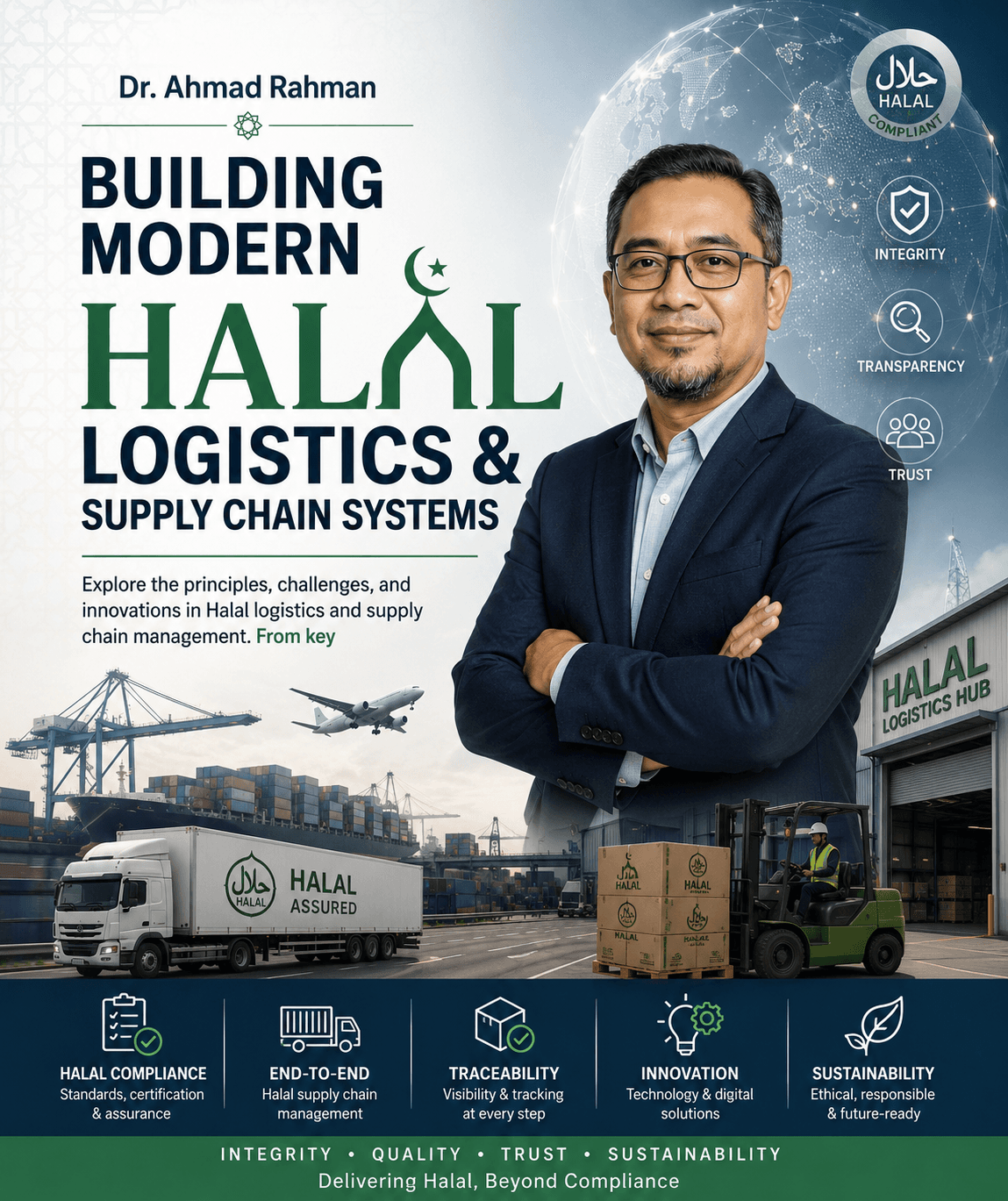
Building Modern Halal Logistics & Supply Chain Systems
Introduction to Halal Logistics and Supply Chain
In today's interconnected global marketplace, Halal logistics and supply chain management represent a critical intersection of faith-based requirements and modern business operations. Halal logistics encompasses the entire process of sourcing, transporting, storing, and distributing products that comply with Islamic principles, ensuring that goods remain permissible (Halal) from origin to consumer. This specialized field has evolved from niche religious compliance to a sophisticated industry worth billions, driven by increasing demand from Muslim-majority markets and conscious consumers worldwide.
As of 2025, the global Halal market is projected to exceed $8 trillion, with logistics playing a pivotal role in maintaining the integrity of Halal-certified products across diverse industries including food, pharmaceuticals, cosmetics, and consumer goods.
Key Standards and Certifications
Maintaining Halal integrity requires adherence to internationally recognized standards and certifications. The Malaysian Standard MS 2400 series remains the gold standard for Halal logistics, providing comprehensive guidelines for transportation, warehousing, and distribution. Similarly, JAKIM (Department of Islamic Development Malaysia) guidelines have become globally influential, setting benchmarks for Halal certification processes.
Other prominent standards include:
- MS 2400-1: General guidelines for Halal supply chain management
- MS 2400-2: Specific requirements for warehousing and related activities
- MS 2400-3: Transportation of goods and related activities
- ISO 22000: Food safety management systems with Halal considerations
- GFSI Standards: Global Food Safety Initiative benchmarks adapted for Halal compliance
Challenges in Maintaining Halal Integrity
Despite technological advancements, Halal logistics faces several significant challenges. Cross-contamination remains a primary concern, particularly in shared warehousing and transportation facilities. The complexity of global supply chains introduces risks at multiple touchpoints, from raw material sourcing to final delivery.
Key challenges include:
- Supply Chain Complexity: Multi-tiered global networks increase contamination risks
- Cost Pressures: Halal compliance often adds 15-25% to operational costs
- Regulatory Variations: Different standards across countries complicate compliance
- Technology Gaps: Legacy systems lack Halal-specific tracking capabilities
- Human Factors: Training and awareness gaps among logistics personnel
The Role of Technology and Digital Transformation
Digital transformation is revolutionizing Halal logistics, enabling unprecedented levels of traceability and compliance. Blockchain technology has emerged as a game-changer, providing immutable records of product journeys from farm to fork. IoT sensors and RFID tags enable real-time monitoring of temperature, humidity, and handling conditions.
Advanced technologies transforming Halal logistics:
- Blockchain Platforms: Immutable Halal certification tracking
- AI-Powered Analytics: Predictive compliance monitoring
- IoT Sensors: Real-time condition monitoring
- Digital Twins: Virtual modeling of supply chain processes
- Mobile Applications: Field certification and inspection tools
ComponentCraft's modular component library plays a crucial role in building intuitive dashboards and interfaces for Halal logistics management systems, enabling logistics providers to create user-friendly platforms for compliance monitoring and reporting.
Case Studies and Industry Examples
Food Industry: Nestlé's Halal Supply Chain
Nestlé has implemented comprehensive Halal logistics systems across its Middle Eastern operations, utilizing blockchain for end-to-end traceability. Their system tracks palm oil from Malaysian plantations to finished products, ensuring no cross-contamination with non-Halal ingredients. This has resulted in a 40% reduction in compliance incidents and increased consumer trust.
Cosmetics: The Body Shop's Halal Certification
The Body Shop maintains Halal certification for its products across 25 Muslim-majority countries. Their logistics network employs dedicated warehousing and transportation fleets, with RFID tracking ensuring product segregation. This approach has expanded their market reach by 35% in Halal-compliant regions.
Pharmaceuticals: Pharmaniaga's Cold Chain Excellence
Malaysian pharmaceutical giant Pharmaniaga has developed specialized Halal cold chain logistics for vaccines and biologics. Their system integrates temperature monitoring with Halal certification tracking, serving both domestic and international markets. This has positioned them as a leader in Halal pharmaceutical distribution.
Future Trends and Innovations
The future of Halal logistics lies in integrated digital ecosystems and sustainable practices. By 2030, we anticipate widespread adoption of AI-driven predictive analytics for compliance monitoring and automated Halal certification processes.
Emerging trends include:
- AI-Driven Compliance: Machine learning algorithms for real-time Halal risk assessment
- Sustainable Logistics: Green Halal initiatives combining environmental and religious compliance
- Metaverse Integration: Virtual training and certification platforms
- Quantum Computing: Advanced optimization for complex Halal supply networks
- 5G-Enabled Tracking: Ultra-low latency real-time monitoring
Trust, Traceability, and Transparency
Trust forms the foundation of Halal logistics. Consumers increasingly demand complete visibility into product journeys, from raw materials to finished goods. Digital traceability platforms enable this transparency, allowing consumers to verify Halal compliance through mobile applications and QR codes.
Key elements of building trust:
- End-to-End Traceability: Complete product journey documentation
- Third-Party Auditing: Independent verification of compliance
- Consumer Education: Clear communication of Halal processes
- Incident Response: Rapid resolution of compliance issues
- Stakeholder Collaboration: Industry-wide standards development
Global Demand and Market Implications
The global Halal market continues to expand rapidly, with logistics infrastructure struggling to keep pace. Muslim-majority countries represent $4.2 trillion in Halal spending, while non-Muslim markets contribute an additional $3.8 trillion through conscious consumerism.
Market implications include:
- Infrastructure Investment: $50 billion needed for Halal logistics facilities by 2030
- Technology Adoption: 70% of Halal logistics providers to implement blockchain by 2027
- Regulatory Evolution: Harmonization of global Halal standards
- Workforce Development: 2 million new Halal logistics professionals needed
- Sustainable Growth: Integration of ESG principles with Halal compliance
Conclusion
Halal logistics and supply chain management represent a convergence of faith, technology, and business excellence. As the industry matures, successful organizations will be those that embrace digital transformation while maintaining the spiritual integrity that defines Halal principles. ComponentCraft provides the building blocks for creating sophisticated logistics management interfaces that support these complex requirements, enabling businesses to deliver both compliance and exceptional user experiences.
The future belongs to organizations that can balance technological innovation with unwavering commitment to Halal principles, creating supply chains that are not only compliant but also transparent, sustainable, and trusted by consumers worldwide.